

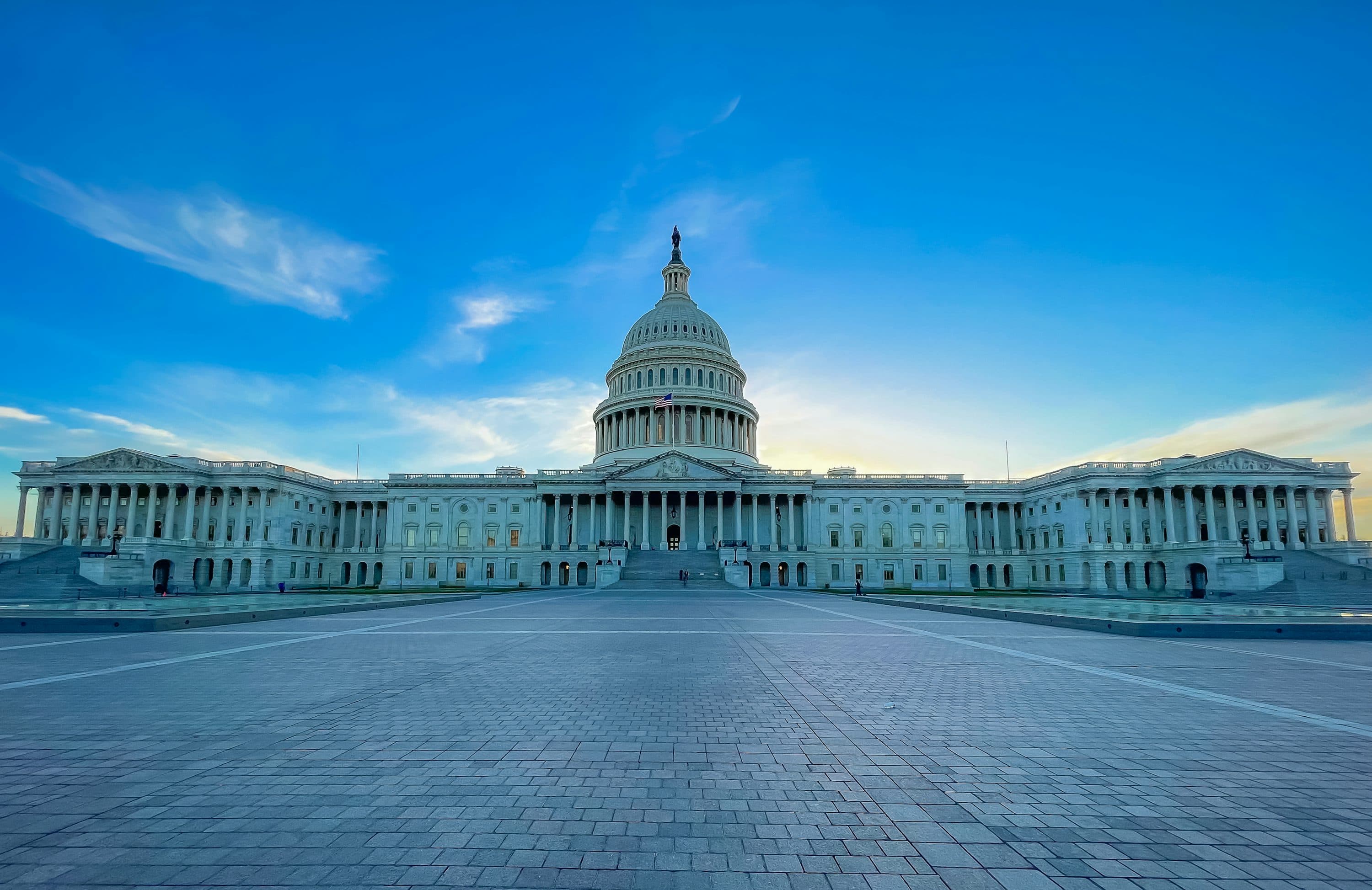

A bipartisan bill would finally write digital accessibility into federal statute — directing the DOJ and EEOC to set enforceable standards for websites and apps. Here's what H.R. 3417 actually does, and what it doesn't.
For 35 years, digital accessibility under the ADA has been governed by interpretation rather than explicit statute. The 1990 law never mentioned websites or apps — because they barely existed — so courts, regulators, and businesses have spent decades arguing about how a physical-world civil-rights law applies online. H.R. 3417 is the latest attempt to end that ambiguity by writing digital accessibility directly into federal law.
It's worth understanding clearly, because the bill is frequently mischaracterized — including as a business-friendly "safe harbor," which it explicitly is not. Here's what H.R. 3417 actually does, where it stands, and what it means for your organization.
Legislative snapshot
H.R. 3417, the Websites and Software Applications Accessibility Act of 2025, was introduced in the U.S. House of Representatives on May 14, 2025, by Representative Pete Sessions (R-TX), joined by Representative Steny Hoyer (D-MD) — who helped draft the original ADA in 1990. It's bipartisan, with 7 cosponsors (5 Democrats, 2 Republicans) plus its sponsor, and it's the third time a version of this bill has been introduced across recent congressional sessions.
As of now, the bill is at the first stage of the legislative process — introduced and referred to committee. It has not passed the House, the Senate, or been signed into law. In practical terms: nothing about your obligations changes today because of H.R. 3417. What matters is the direction it signals and what it would do if enacted.
What the bill would actually do
H.R. 3417's core purpose is to replace interpretation with a clear, enforceable federal standard. Its key provisions:
- Affirms digital accessibility is required under the ADA. The bill states plainly that entities covered by the ADA must not operate or maintain websites and software applications that are inaccessible to people with disabilities — whether the entity has a physical location or is digital-only. This directly addresses the long-running court split over whether websites without a physical "nexus" are even covered.
- Directs the DOJ and EEOC to set standards. Rather than writing technical requirements into the statute itself, the bill tasks the Department of Justice (for Titles II and III — governments and public accommodations) and the EEOC (for Title I — employment) with setting and periodically updating enforceable accessibility standards for websites, electronic documents, and software applications. Periodic updates matter: it's designed to keep pace with evolving technology rather than freezing one version of a standard into law.
- Provides grants for small entities. The bill authorizes grants to help small entities remediate or replace existing inaccessible web content and applications — an acknowledgment that compliance has real costs for smaller organizations.
- Covers a broad range of entities. Employers, employment agencies, labor organizations, public entities, public accommodations, testing entities, and commercial providers all fall within scope.
What the bill does NOT do
This is where the common mischaracterization needs correcting. Some proposed accessibility bills over the years have included a "notice and opportunity to cure" provision — a grace period giving businesses a window to fix issues before they can be sued, effectively a litigation safe harbor.
H.R. 3417 does not include that. It contains no "notice and cure" process and no business-focused litigation shield. Individuals with disabilities retain their right to file lawsuits against entities with inaccessible digital assets. If you've read that this bill protects businesses from ADA litigation, that's incorrect — its emphasis is on setting clear standards and improving access, not on limiting plaintiffs.
H.R. 3417 sets a clearer standard — it does not create a safe harbor. The right to sue over inaccessible digital assets stays fully intact.
Why it matters even though it hasn't passed
Most introduced bills never become law, and this one faces the usual long odds. So why should a compliance team care?
First, it clarifies the trajectory. Whether or not this specific bill passes, the legislative direction is unmistakable: toward explicit, enforceable digital accessibility standards, not away from them. Betting on accessibility obligations weakening is betting against a 35-year trend reinforced by bipartisan legislation.
Second, it would resolve the "physical nexus" ambiguity that some businesses currently rely on. If enacted, the argument that a digital-only business or a website without a physical tie isn't covered would be foreclosed by statute. Businesses banking on that defense should treat it as a shrinking shelter.
Third, the standard it points to is the one you should already be building to. Any DOJ/EEOC rulemaking under this bill would be grounded in WCAG — the same technical benchmark courts already use. Which leads to the only action item that matters right now.
What to do now
The practical response to H.R. 3417 is the same response that serves you regardless of whether it passes:
- Don't wait for the law to change. Your current ADA Title III exposure is real and active today — thousands of website lawsuits are filed every year under existing law, no new statute required.
- Build to WCAG 2.2 AA. Whatever standard the DOJ and EEOC would eventually set, it will be based on WCAG. A site conformant to WCAG 2.2 AA today is positioned for any future federal standard.
- Remediate at the code level, not with overlays — durable conformance is what holds up under current litigation and any future rule.
- Monitor continuously, so you maintain conformance and keep a documented record of your accessibility practice.
- Watch the bill, don't bank on it. Track H.R. 3417's progress for the signal it sends, but don't make compliance decisions contingent on legislation that may not pass this session.
The bottom line
H.R. 3417 would do something the disability community and many businesses have wanted for years: replace decades of courtroom interpretation with a clear, enforceable federal standard for digital accessibility, set by the DOJ and EEOC and updated as technology evolves. It is bipartisan, it is early in the process, and — contrary to a common misreading — it offers businesses no safe harbor from litigation. For US organizations, the takeaway isn't to wait and see. It's to recognize where the law is heading and get conformant now, because the standard the bill points toward is the one already governing your risk: WCAG 2.2 AA.
This article is for general information and is not legal advice. For guidance on your specific situation, consult a qualified attorney.